Things to Do in Latvia
Dark rye, white sand, and midsummer light that lasts past midnight
Top Things to Do in Latvia
Find activities and tours you'll actually want to do. Book through our partners -- no booking fees.


Plan Your Trip
Essential guides for timing and budgeting
Climate Guide
Best times to visit based on weather and events
View guide →Day Trips
The best excursions and nearby destinations worth the journey
Explore day trips →Where to Stay
Best neighbourhoods, hotel picks, and booking tips
Find hotels →Travel Insurance
What's required, what coverage matters, and how to get a quote
Read guide →What to Pack
Climate-specific gear, essentials, and what to leave at home
See packing list →Before you go, read our Latvia safety guide for neighbourhoods to know, emergency numbers and current official travel advice.
When Should You Visit Latvia?
Tap a month for weather, crowds, and highlights
View full year-round climate guide →Your Guide to Latvia
About Latvia
Latvia slips in without a drumroll. The Baltic air smells of pine sap and salt. Forests hush half the country. Vecrīga, Riga's Old Town, fits inside twenty minutes of walking yet keeps you for days. Cobbles lead to the House of the Blackheads, Gothic excess rebuilt in blinding white. Five former Zeppelin hangars now house Centraltirgus, the Central Market.
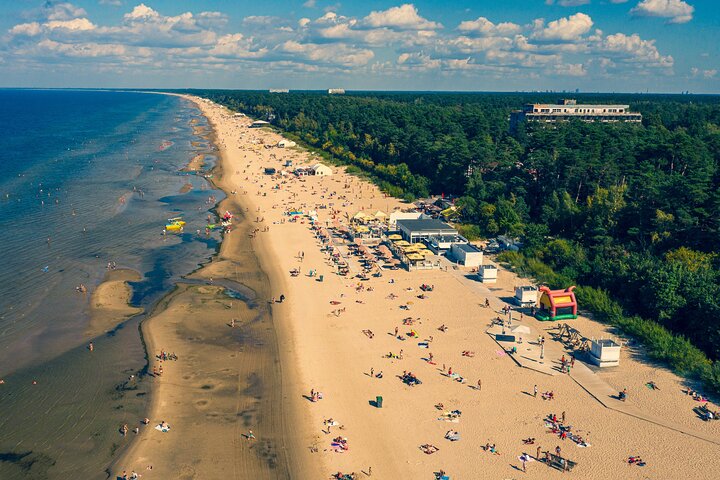
Vendors sell smoked lamprey, caraway-studded Jāņi cheese, rye bricks dark enough to build a wall. Walk north ten minutes. Alberta iela erupts into Europe's densest Art Nouveau strip. Turquoise stucco faces gaze down, ignored by most tourists. Latvia never learned to brag. Jūrmala's white-sand beaches run twenty kilometres along the Gulf of Riga.
The sand squeaks underfoot. Newcomers gawk, locals shrug. Sigulda's red sandstone cliffs and castle ruins earn the nickname Latvia's Switzerland. Autumn sets the valley on fire with copper and amber. Trails empty. Winter buys solitude with darkness and Baltic wind that slices through every coat seam. Temperatures stay below freezing for months.
The payoff is Riga under snow, hot spiced wine in Dome Square, a country that feels briefly, gloriously yours.
Riga splits its personality between the medieval Old Town and the Art Nouveau district along Alberta iela, and the choice between them shapes an entire day, whether the Central Market's five pavilions deserve a morning or just a pass-through, how early to line up for the St. Peter's Church tower lift in summer, so TTDI's Riga street-level primer sorts those decisions in the detail a country page like this one can only point toward.
Travel Tips
Transportation: Riga's trams slice through the center fastest. Lines link Vecrīga, Central Market, and the Art Nouveau district, dodging Brīvības iela's rush-hour gridlock. Heading to Jūrmala? Catch the commuter train from Riga Central Station. It leaves every thirty minutes and reaches the coast in under forty, pine trunks brushing the windows. Beyond the capital, buses from the terminal beside Centraltirgus beat the trains for Sigulda, Cēsis, or Kuldīga. Download Mobilly. One app covers trams, city buses, and most intercity routes. No ticket window roulette.
Money: Latvia uses the euro. Easy. Contactless rules Riga: cafés, trams, even some Centraltirgus stalls. Carry coins for public toilets and coastal towns where card readers vanish. Skip the currency kiosks ringing the Old Town. Posted rates look kind until fees bite. Use a standalone bankomāts instead. Tipping is light. Round up or leave ten percent in restaurants. Staff appreciate it.
Cultural Respect: Latvians start quiet. Reserved does not mean rude. They avoid tram chatter. Respect it. Shoes off at the door. Always. Never ask. Calling a Latvian Russian is the fastest route to frost. Lithuania is not the same country. The languages do not overlap. Histories differ. People notice. Visit during Līgo and Jāņi in late June. Bonfires roar. Flower crowns bloom. Caraway cheese appears. The nation relaxes into its only mass exuberance. Outsiders are welcome at the fire.
Food Safety: Begin at Centraltirgus, five Zeppelin hangars turned Europe's vast indoor market. The smoked fish hall alone justifies the detour. Golden lamprey and eel hang in rows. Woodsmoke and brine thicken the air. Tap water is safe nationwide. EU rules govern food handling, so graze the stalls without fear. Rupjmaize, Latvian rye, bakes darker and sweeter than western loaves. Order pelēkie zirņi: grey peas fried with bacon and onions, earthy against rendered fat. Riga Black Balsam straight is bitter punishment. Ask for it in warm blackcurrant juice on a cold night.
When to Visit
Latvia's seasons split so cleanly that timing your trip decides the whole mood. June through August is peak for a reason: 18 to 25°C (64 to 77°F), Jūrmala's beaches turn swimmable, and daylight barely quits, with sunset sliding past 22:30 in late June. Midsummer, Jāņi, lands 23-24 June; the nation bolts for the countryside, fires blaze, beer flows, caraway cheese disappears, and Riga empties like a movie set.
July and August bring the warmest coastal water and the steepest hotel tabs, expect a clear premium in Riga and Jūrmala, though even peak prices stay south of Scandinavia or western Europe.
September is the sharpest move. Crowds vanish, rates fall, thermometers hover 12 to 17°C (54 to 63°F), and the Gauja Valley around Sigulda erupts in autumn color that rivals New England minus the traffic. October chills fast, turns wetter, days shrink, and by November the grey settles, not rain, just a low overcast Latvians wear like a second skin.
Winter is a contract. December to February means minus 5 to minus 15°C (23 to 5°F), ice on cobbles, darkness by 16:00. Riga's Christmas market in Dome Square, the city claims it invented the tree in 1510, floods the Old Town with mulled wine and gingerbread. Kemeri's bog boardwalks, snow-dusted and silent, feel lunar. Hotel rates dive, sometimes halving against July.
Spring crawls in. March is still winter wearing a fake moustache. April brings the thaw and the first brave café tables along the canal. May hits with lilacs in Bastejkalns so heavy the scent owns entire blocks. Prices sit below summer levels, and western Europe flights stay cheap, Riga is a budget-airline hub, so access stays painless year-round.
First visit? Late June gifts the longest days, Jāņi fireworks, and beach weather. Prefer quiet and savings? Mid-September hands you the same country, calmer, cheaper, and lit like a painting.
More Ways to Experience Latvia
Tours, day trips, and local experiences curated by on-the-ground operators.
Didn't see anything interesting yet?
Browse Viator's full catalog of tours, day trips, food experiences, and private guides in Latvia.
See All Latvia Tours on Viator